CDCP
Does CDCP Cover Teeth Cleaning in 2026?


for teeth cleaning includes the exam, polishing, and fluoride treatment that usually go with it, as one of the plan's core preventive services. Most adults can book a cleaning and have it billed directly, with no approval wait. However, how often you can get one covered and how much of the dental cleaning cost you still owe depend on your income, your oral health, and whether your dentist charges above the CDCP rate.
If you'd rather skip the guesswork, lets you check which dentists near you accept CDCP before you book.
If you'd rather skip the guesswork, lets you check which dentists near you accept CDCP before you book.
What Does CDCP Cover for Teeth Cleaning?
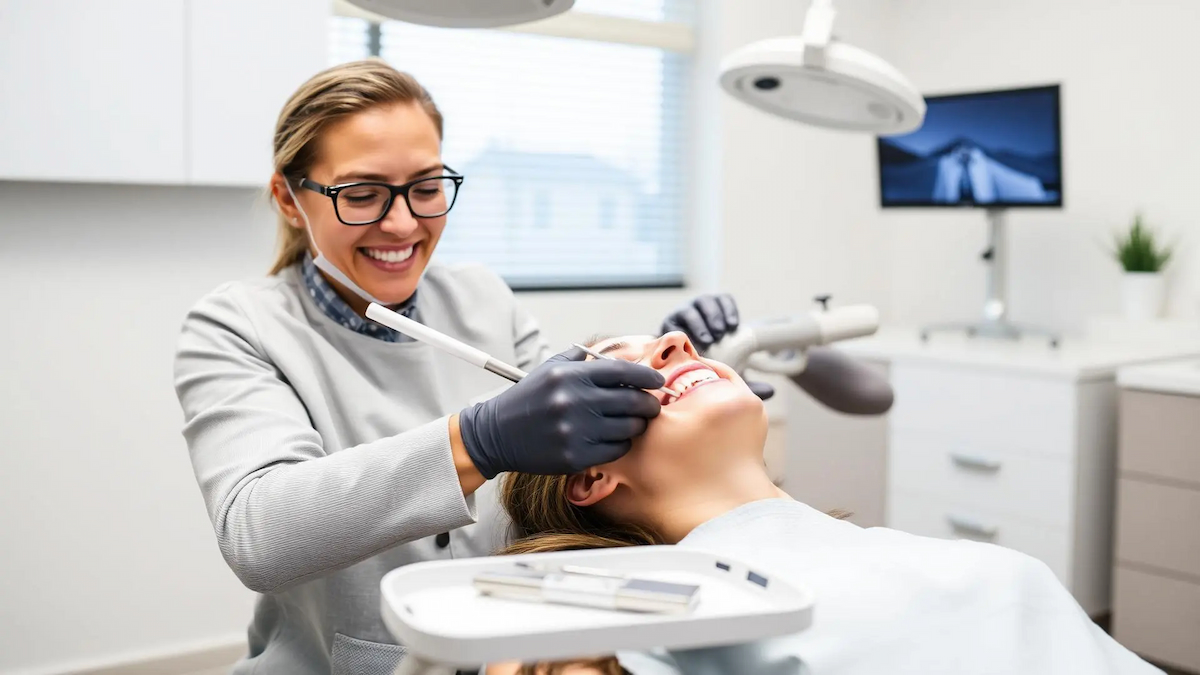
The places routine cleaning under its diagnostic and preventive services category, the same group that covers dental exams, x-rays, fluoride applications, and sealants. That means the appointment most people think of as "a cleaning" is rarely just one line item. It's typically an exam to check your oral health, scaling to remove plaque and tartar, a polish to finish the surface, and sometimes a fluoride application, all billed as separate but related services.
Scaling is also where CDCP goes further than a lot of people expect. The plan covers cleaning under the gumline too, which falls under periodontal services rather than the basic preventive category, and it's what a dentist reaches for when plaque and tartar have built up below the gum line, not just on the visible surface of the tooth.
Where this gets more specific is frequency. CDCP was built around a set recall interval, not a cleaning every time someone feels like a top-up, and that interval is tighter than what a lot of people are used to under workplace dental plans, which often cover a cleaning every six months.
Is Teeth Cleaning Covered by CDCP in Every Case?
Not every visit within a year qualifies, and the frequency cap is where people get tripped up. Is teeth cleaning covered by CDCP if you were already in eight months ago? Usually not for a second full visit, because the standard interval works from is once every 12 months, not the six-month recall a lot of workplace dental plans are built around.
For adults 17 and older, that yearly visit draws from a pool of 4 units of scaling, with each unit representing roughly 15 minutes of chair time, so a typical cleaning uses somewhere between two and four units depending on how much buildup there is and how long the appointment runs. If a visit uses all 4 units, there's nothing left in that 12-month period to apply toward a second cleaning.
Asking for a cleaning sooner than that, say every six months, isn't impossible, but it's the exception rather than something CDCP grants routinely. A dentist can document a clinical reason, active gum disease, uncontrolled diabetes, a high cavity risk, and request additional scaling units on that basis, but approval for a full second cleaning within the year is uncommon. What happens more often in practice: if the first visit only used two or three units, some clinics will apply the leftover unit toward part of a second cleaning later in the same period, though you'd likely still pay out of pocket for the remainder of that appointment. This is also why two people can ask "does CDCP cover teeth cleaning twice a year" and get different answers, since it usually comes down to how many units the first visit used, not a blanket yes or no.
Routine Cleaning vs. Deep Cleaning Under CDCP
effectively treats two different kinds of cleaning, and the distinction changes both what's involved and what it costs.
Routine cleaning (prophylaxis) is scaling and polishing above and slightly below the gumline for a patient with generally healthy gums. It's a single appointment, no freezing required in most cases, and it's the visit most people picture when they hear "teeth cleaning."
Deep cleaning is a different level of treatment, and it goes by a few names in practice, scaling and root planing, periodontal scaling, and deep cleaning all describe the same procedure. It's used when tartar has built up well below the gumline and the gums show signs of periodontal disease. The dentist or hygienist cleans root surfaces more aggressively, sometimes numbing the area first, and it's often done one section of the mouth at a time rather than in one visit.
Here's what changes between the two under CDCP:
| Factor | Routine Cleaning | Deep Cleaning (Scaling and Root Planing) |
|---|---|---|
| Gum condition | Healthy or mildly inflamed | Signs of gum disease present |
| Preauthorization | Not required, as long as total scaling stays within the 4-unit, 12-month allowance | Same 4-unit, 12-month allowance; preauth needed only if it's exceeded |
| Documentation | Basic exam notes | Periodontal charting on file with your dentist |
| Billing | Billed directly by your dentist | Billed directly by your dentist, if within the allowance |
| CDCP eligibility | Covered within the standard allowance | Covered within the same allowance, not a separate one |
One thing worth clearing up: routine cleaning and gum-line scaling tied to periodontal disease aren't two separate benefits with two separate caps. They draw from the same 4-unit, 12-month allowance, and both get billed directly by your dentist without preauthorization as long as the total stays under that cap. Preauthorization only enters the picture if you need more scaling than the standard allowance covers, which is the exception rather than the rule.
How Much Does CDCP Pay for Dental Teeth Cleaning?
How much CDCP actually kicks in depends entirely on your adjusted family net income from your most recent tax return.
| Adjusted Family Net Income | CDCP Covers | You Cover |
|---|---|---|
| Under $70,000 | 100% of the CDCP fee guide rate | 0% (plus any fee gap, explained below) |
| $70,000 to $79,999 | 60% of the CDCP fee guide rate | 40%, plus any fee gap |
| $80,000 to $89,999 | 40% of the CDCP fee guide rate | 60%, plus any fee gap |
| $90,000 and above | Not eligible for CDCP | Full cost |
To even be in this table, you also need to meet the plan's other three conditions: no access to private dental insurance through your own job, a spouse's job, or a pension, a filed Canadian tax return for the prior year, and Canadian residency for tax purposes. Miss any one of those four and the income tiers don't matter.
The CDCP Fee Gap: Why You May Still Pay Out of Pocket
Here's the piece people miss most often: CDCP doesn't pay based on what your dentist actually charges. It pays based on its own national fee guide, and clinics routinely bill above that number. That gap is a major reason your final dental cleaning cost can end up higher than expected even when you're fully covered on paper.
For example, say your dentist charges $180 for a routine cleaning, but the CDCP fee guide sets that same procedure at $145. In the under-$70,000 bracket, CDCP covers the full $145, so that's what it pays. You'd still owe the $35 difference yourself, the fee gap, no matter which income tier you're in. If you're in the $70,000 to $89,999 range, a co-payment stacks on top of that gap, pushing the out-of-pocket total higher still.
The federal program itself recommends asking for a written estimate before treatment starts, so you know exactly what you'll owe once the CDCP portion is applied. Clinics that see a lot of CDCP patients tend to lay this out upfront, rather than leaving you to find out at checkout.
Teeth Cleaning Cost in Canada (2026)
Pricing shifts depending on province, the specific clinic, and whether you need a routine or deep cleaning, but as of mid-2026 the going dental cleaning cost across Canada looks roughly like this:
| Service | Typical Cost (2026) |
|---|---|
| Routine cleaning (scaling and polishing) | $150 to $350 |
| Deep cleaning, per quadrant (scaling and root planing) | $150 to $400 |
| Full-mouth deep cleaning | $600 to $1,600 |
Add-on costs stack on top of the cleaning itself:
Every implant has three working parts:
Every implant has three working parts:
- Dental exam (if not bundled in): $50 to $150
- X-rays: $50 to $200
- Fluoride application: $30 to $75
- Local freezing for deep cleaning: usually included, occasionally $30 to $60 separately
Does CDCP Cover Deep Cleaning for Gum Disease?
Yes, within limits. Deep cleaning (scaling and root planing) draws from the same 4-unit-per-12-month allowance as routine scaling, so it's covered without preauthorization as long as the total units used across all your cleanings in that period stay under the cap. Where it gets more involved is when periodontal disease is advanced enough that a patient needs more units than the standard allowance provides. In that case, your dentist documents the periodontal charting and clinical findings and can submit a request for additional units, though approval beyond the standard allowance is granted case by case rather than automatically.
When Does CDCP Require Preauthorization for Teeth Cleaning?
Less often than most people expect. Routine cleanings and standard scaling, within the frequency limits, are billed directly by your dentist with no waiting period and no separate approval step.
Preauthorization mainly comes up in one scenario: needing more scaling than the standard 4-unit, 12-month allowance covers. Your dentist can document a clinical reason, and submit a request for additional units, but approval is the exception rather than something routinely granted, so it's worth budgeting for an out-of-pocket cost if you want a cleaning sooner than your 12-month mark. Preauthorization can also apply if sedation beyond nitrous oxide or oral sedation is needed for a longer or more complex appointment, though that's uncommon for routine cleanings. When a request is submitted, a decision typically comes back within a few business days to a couple of weeks. If you're hoping an earlier cleaning will be covered, don't assume it will be, confirm with your dentist first, since it comes down to your specific unit usage and clinical history, not just how often you'd like to come in.
Preauthorization mainly comes up in one scenario: needing more scaling than the standard 4-unit, 12-month allowance covers. Your dentist can document a clinical reason, and submit a request for additional units, but approval is the exception rather than something routinely granted, so it's worth budgeting for an out-of-pocket cost if you want a cleaning sooner than your 12-month mark. Preauthorization can also apply if sedation beyond nitrous oxide or oral sedation is needed for a longer or more complex appointment, though that's uncommon for routine cleanings. When a request is submitted, a decision typically comes back within a few business days to a couple of weeks. If you're hoping an earlier cleaning will be covered, don't assume it will be, confirm with your dentist first, since it comes down to your specific unit usage and clinical history, not just how often you'd like to come in.
Frequently Asked Questions About CDCP and Dental Cleaning

Easily find trusted dentists nearby

Personalized AI Matching
Easy Online Booking
100% Free
Related Articles


Find the Right Dentist Instantly
Tell us what you need, and Denzy searches every clinic near you and matches you to the right one.

Personalized AI Matching

Easy Online Booking

100% Free