Oral Health
Types of Braces: Which Orthodontic Option Is Right for You?


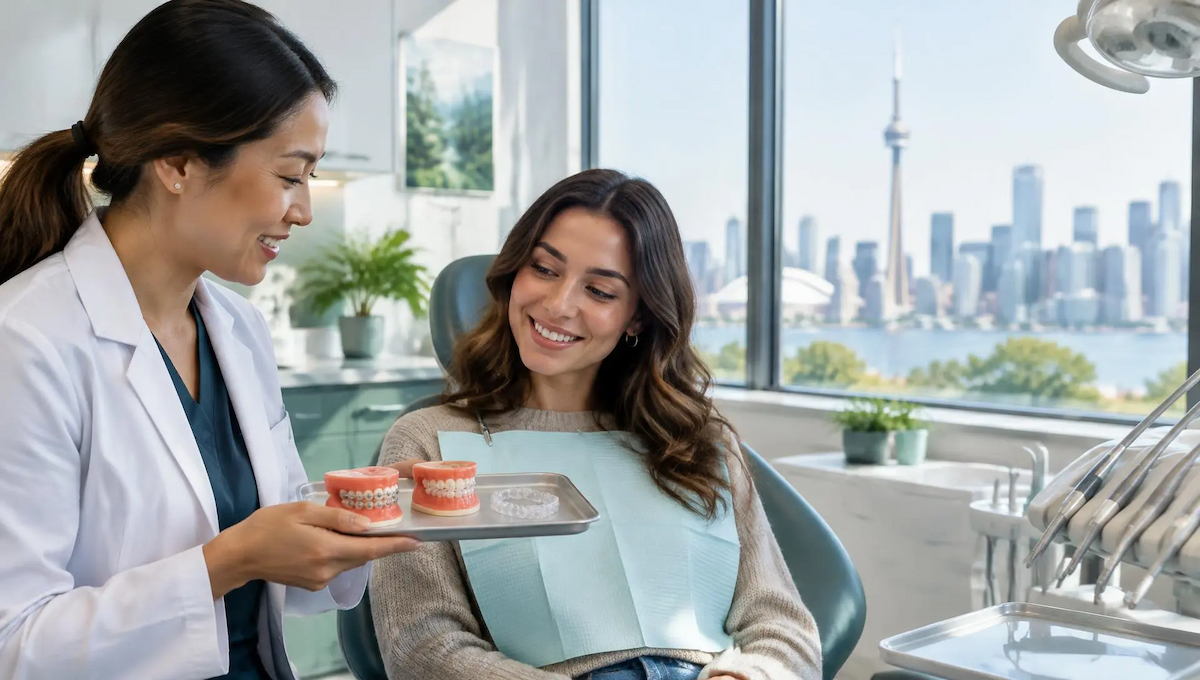
When most people think of braces, they picture a mouth full of metal brackets and wires. But traditional metal braces are just one of five main options available today. Each type works a little differently, has its own advantages and drawbacks, and comes with a different price tag. Some are better suited to complex alignment problems, while others are designed for people who would rather keep their orthodontic treatment discreet.
This guide breaks down the different types of braces, who they're best suited for, and what you can expect to pay in Canada. We'll also compare the options side by side, so you have a better idea of what to discuss with your orthodontist before making a decision.
If you're still weighing your options, can help you find an orthodontist or who offers the type of braces you're considering, without having to contact several offices individually.
This guide breaks down the different types of braces, who they're best suited for, and what you can expect to pay in Canada. We'll also compare the options side by side, so you have a better idea of what to discuss with your orthodontist before making a decision.
If you're still weighing your options, can help you find an orthodontist or who offers the type of braces you're considering, without having to contact several offices individually.
How Do Braces Actually Move Your Teeth?
Although the different types of braces don't all look alike, they work on the same basic principle. They apply gentle, consistent pressure over time, prompting the bone surrounding your teeth to remodel so the teeth can gradually move into new positions.
Fixed braces, including metal, ceramic, self-ligating, and lingual braces, use brackets bonded to the teeth and an archwire that guides their movement. Your orthodontist adjusts the wire at regular appointments as treatment progresses. Clear aligners take a different approach. Instead of brackets and wires, they use a series of custom-made plastic trays, each designed to move your teeth a little further toward their intended positions.
The main distinction is that fixed braces stay in place throughout treatment, while clear aligners can be removed. That difference affects everything from daily maintenance to the level of discipline required during treatment.
Fixed braces, including metal, ceramic, self-ligating, and lingual braces, use brackets bonded to the teeth and an archwire that guides their movement. Your orthodontist adjusts the wire at regular appointments as treatment progresses. Clear aligners take a different approach. Instead of brackets and wires, they use a series of custom-made plastic trays, each designed to move your teeth a little further toward their intended positions.
The main distinction is that fixed braces stay in place throughout treatment, while clear aligners can be removed. That difference affects everything from daily maintenance to the level of discipline required during treatment.
Metal Braces (Traditional Braces)
Metal braces are the type most people are familiar with. Small stainless steel brackets are bonded to each tooth and connected by an archwire, which your orthodontist adjusts periodically to guide the teeth into alignment.
They're also one of the most versatile options available. From straightforward crowding to more complicated bite problems, traditional metal braces can treat a wide range of orthodontic issues that may be difficult to correct with clear aligners alone. They're generally the most affordable fixed option, too. Modern brackets are smaller and less bulky than older designs, making them somewhat more comfortable and less conspicuous than many people expect.
They're also one of the most versatile options available. From straightforward crowding to more complicated bite problems, traditional metal braces can treat a wide range of orthodontic issues that may be difficult to correct with clear aligners alone. They're generally the most affordable fixed option, too. Modern brackets are smaller and less bulky than older designs, making them somewhat more comfortable and less conspicuous than many people expect.
Best suited for:
People with significant crowding, bite problems, or complex alignment needs, as well as anyone who prioritizes affordability and durability over appearance.
Typical cost:
$5,000 to $8,000.
Ceramic Braces
Ceramic braces work much like traditional metal braces, using brackets and an archwire to move the teeth gradually. The difference is in the brackets themselves. They're made from a tooth-coloured ceramic material, so they blend in with your teeth rather than standing out the way metal brackets do.
For people who want a less noticeable option but still need fixed braces, ceramic brackets can be a good compromise. They generally cost more than metal braces, though, and the material comes with a few drawbacks. Ceramic brackets are more brittle than their metal counterparts,which means they can break more easily. They may also stain or discolour over time, particularly if you regularly drink coffee, tea, or red wine and don't keep up with cleaning.
For people who want a less noticeable option but still need fixed braces, ceramic brackets can be a good compromise. They generally cost more than metal braces, though, and the material comes with a few drawbacks. Ceramic brackets are more brittle than their metal counterparts,which means they can break more easily. They may also stain or discolour over time, particularly if you regularly drink coffee, tea, or red wine and don't keep up with cleaning.
Best suited for:
Teens and adults who prefer a more discreet fixed option and are comfortable paying a little more and taking extra care with their oral hygiene and eating habits.
Typical cost:
$5,500 to $9,000.
Self-Ligating Braces
At first glance, self-ligating braces look much like traditional braces. The difference is how the archwire is held in place. Instead of using the small elastic bands or metal ties found on conventional brackets, self-ligating braces have a built-in clip or door that secures the wire.
This design means there are fewer small parts around the brackets for food to get caught in, and appointments can sometimes be quicker because the orthodontist doesn't have to replace individual elastic ties. However, the claims that self-ligating braces consistently shorten overall treatment time aren't strongly supported by the research. While certain appointments may take less time, the total length of treatment is often comparable to that of traditional braces.
This design means there are fewer small parts around the brackets for food to get caught in, and appointments can sometimes be quicker because the orthodontist doesn't have to replace individual elastic ties. However, the claims that self-ligating braces consistently shorten overall treatment time aren't strongly supported by the research. While certain appointments may take less time, the total length of treatment is often comparable to that of traditional braces.
Best suited for:
People who want fixed braces and potentially shorter adjustment appointments, without moving away from the familiar bracket-and-wire approach.
Typical cost:
$5,000 to $9,000.
Lingual Braces
Lingual braces use brackets and wires much like traditional braces, but they're attached to the backs of your teeth rather than the fronts. This makes them virtually invisible when you smile or speak, which is a major draw for adults who want orthodontic treatment without visible hardware.
There are a few things to consider before choosing them, however. Lingual braces are typically the most expensive option on this list, partly because the brackets need to be custom-fitted to the back surfaces of your teeth. They can also feel awkward at first, especially when your tongue comes into contact with the brackets. Many people need a few weeks to adjust, and some experience temporary changes in speech. Not every orthodontist offers lingual treatment, since it requires additional training and specialized laboratory work.
There are a few things to consider before choosing them, however. Lingual braces are typically the most expensive option on this list, partly because the brackets need to be custom-fitted to the back surfaces of your teeth. They can also feel awkward at first, especially when your tongue comes into contact with the brackets. Many people need a few weeks to adjust, and some experience temporary changes in speech. Not every orthodontist offers lingual treatment, since it requires additional training and specialized laboratory work.
Best suited for:
Adults who want a fixed, highly discreet treatment option, have a case that can be treated with lingual braces, and are willing to pay more for the added discretion.
Typical cost:
$8,000 to $13,000.
Clear Aligners (Invisalign and Similar Systems)
work quite differently from fixed braces. Rather than using brackets and wires, they rely on a series of custom-made transparent plastic trays. You typically switch to a new set every one to two weeks, with each set moving your teeth a little closer to their planned positions.
One of the biggest advantages is convenience. You can remove the trays to eat, drink anything other than water, and brush your teeth, which makes maintaining your usual oral hygiene routine easier. They're also difficult to notice when worn.
The cost depends largely on how much correction is needed. A lighter treatment plan, often used for minor crowding or small gaps, generally costs less and takes less time than a comprehensive plan designed to address more extensive alignment or certain bite issues. There are also aligner systems made specifically for teens, some of which include indicators that fade with wear to help parents and orthodontists check whether the trays are being used consistently.
The catch is that clear aligners require commitment. For treatment to work as planned, you generally need to wear them for around 20 to 22 hours a day. Taking them out too often can delay progress or mean you need additional trays. They're effective for many mild to moderate cases, but fixed braces may offer more predictable results for severe crowding or complicated bite problems.
One of the biggest advantages is convenience. You can remove the trays to eat, drink anything other than water, and brush your teeth, which makes maintaining your usual oral hygiene routine easier. They're also difficult to notice when worn.
The cost depends largely on how much correction is needed. A lighter treatment plan, often used for minor crowding or small gaps, generally costs less and takes less time than a comprehensive plan designed to address more extensive alignment or certain bite issues. There are also aligner systems made specifically for teens, some of which include indicators that fade with wear to help parents and orthodontists check whether the trays are being used consistently.
The catch is that clear aligners require commitment. For treatment to work as planned, you generally need to wear them for around 20 to 22 hours a day. Taking them out too often can delay progress or mean you need additional trays. They're effective for many mild to moderate cases, but fixed braces may offer more predictable results for severe crowding or complicated bite problems.
Best suited for:
Teens and adults with mild to moderate crowding or spacing who want a removable, discreet option and can commit to wearing their aligners consistently.
Typical cost:
$3,000 to $4,500 for a lighter treatment plan, $5,000 to $8,000 for a full comprehensive plan, or $4,000 to $7,000 for the teen-specific version.
Braces Cost by Type: A Quick Comparison
| Type | Best For | Typical Cost (2026) | Removable |
|---|---|---|---|
| Clear aligners (Lite) | Mild crowding or spacing, consistent wear | $3,000 to $4,500 | Yes |
| Metal | Complex cases, budget priority | $5,000 to $8,000 | No |
| Clear aligners (Comprehensive) | Moderate to significant alignment | $5,000 to $8,000 | Yes |
| Self-ligating | Fixed treatment with potentially shorter visits | $5,000 to $9,000 | No |
| Ceramic | Less visible fixed option | $5,500 to $9,000 | No |
| Lingual | Maximum discretion, flexible budget | $8,000 to $13,000 | No |
These figures are estimates rather than fixed fees. No province has an official fee guide that sets a single price for comprehensive orthodontic treatment, so what you'll actually pay depends on the practice, the complexity of your case, and the treatment plan your orthodontist recommends. Prices can vary considerably even between clinics in the same city.
Does Where You Live in Canada Change the Cost?
Yes, location can affect the , although the type of treatment and complexity of your case usually matter more. Ontario's dental fee guide, for example, lists orthodontic treatment as "independent consideration," meaning the fee is determined by the practitioner rather than set at a standard rate. Other provinces follow a similar approach.
The following ranges give a general idea of what metal and ceramic braces may cost across Canada.
The following ranges give a general idea of what metal and ceramic braces may cost across Canada.
| Province | Metal Braces | Ceramic Braces |
|---|---|---|
| Ontario | $5,000 to $8,500 | $6,000 to $9,500 |
| British Columbia | $5,500 to $9,000 | $6,000 to $10,000 |
| Alberta | $5,000 to $8,000 | $5,500 to $9,000 |
| Quebec | $4,500 to $7,500 | $5,000 to $8,500 |
| Manitoba | $4,000 to $6,500 | $4,500 to $7,000 |
| Saskatchewan | $3,800 to $6,500 | $4,300 to $7,000 |
| New Brunswick | $4,000 to $6,500 | $4,500 to $7,000 |
| Nova Scotia | $4,000 to $6,500 | $4,500 to $7,000 |
| Prince Edward Island | $3,800 to $6,000 | $4,200 to $6,500 |
| Newfoundland and Labrador | $4,000 to $6,500 | $4,500 to $7,000 |
Clear aligners follow a similar pattern. In Ontario, a lighter treatment plan typically costs $3,500 to $5,000, while comprehensive treatment can range from $5,500 to $8,500. Toronto clinics often charge between $6,000 and $8,500 for comprehensive treatment. British Columbia, Alberta, and Quebec generally fall into similar ranges, with lighter plans costing around $3,000 to $4,500 and comprehensive treatment ranging from $4,500 to $8,000. may fall toward the lower end of that comprehensive range, while prices often sit closer to the middle or upper end.
and Vancouver tend to be among the more expensive markets, partly because of the cost of operating a clinic in a major urban centre. In some parts of Atlantic Canada, prices can also be higher than you might expect, as fewer orthodontic specialists can mean less competition between practices.
Since local fees don't always line up with provincial averages, it's worth getting a quote from an orthodontist in your area. can help you find a dentist or orthodontist near you, giving you a starting point for comparing local options and treatment costs.
and Vancouver tend to be among the more expensive markets, partly because of the cost of operating a clinic in a major urban centre. In some parts of Atlantic Canada, prices can also be higher than you might expect, as fewer orthodontic specialists can mean less competition between practices.
Since local fees don't always line up with provincial averages, it's worth getting a quote from an orthodontist in your area. can help you find a dentist or orthodontist near you, giving you a starting point for comparing local options and treatment costs.
How to Choose the Right Type of Braces
If you're finding it hard to choose, a few practical questions can help narrow things down.
How complex is your case?
Significant crowding, a pronounced overbite or underbite, or certain jaw alignment problems may make clear aligners less suitable. Fixed braces can offer more predictable control for many complex cases. If that's what you're dealing with, it makes more sense to compare metal, ceramic, self-ligating, and lingual braces with your orthodontist before deciding whether aligners are a realistic option.
How comfortable are you with visible braces?
If appearance isn't a major concern, metal braces are usually the more affordable choice. If you'd prefer something less noticeable, ceramic braces, lingual braces, and clear aligners all offer different levels of discretion. The right choice depends on how invisible you want your treatment to be and how much you're prepared to spend.
Will you wear clear aligners consistently?
This is worth being honest with yourself about. Aligners need to be worn for most of the day, every day. If you regularly forget to put them back in after meals or know your schedule will make consistent wear difficult, treatment may take longer than expected or require additional trays. Fixed braces don't have that problem because they're working throughout the day without any input from you.
Are you choosing for a child, a teen, or yourself as an adult?
Some younger children benefit from an early phase of orthodontic treatment to address a developing problem before all their permanent teeth come in. That doesn't necessarily mean they won't need braces later. Teenagers commonly get metal or ceramic braces, while adults can generally choose from all five options. Adult treatment may take longer in some cases because bone remodelling tends to be slower, and gum health needs to be assessed before treatment begins. Your orthodontist can help determine which approach makes sense for your age and dental needs.
Once you have a clearer idea of what matters most to you, the next step is finding someone who offers the treatment you're interested in. can help you locate an orthodontist or dentist near you, so you can move on to a consultation instead of spending more time searching.
Does CDCP or Insurance Cover Braces?
generally does not cover orthodontic treatment for adults. Coverage is limited to specific situations, including certain qualifying medical conditions, such as cleft palate and other craniofacial conditions. Children under 18 may qualify for orthodontic services in certain circumstances, but treatment must meet the program's eligibility requirements and receive preauthorization. For most adults considering braces for routine alignment or bite correction, . Clear aligners may be particularly difficult to get covered, depending on the clinical indication and the program's criteria.
Private dental insurance is a different matter. Orthodontic treatment is usually covered under a separate benefit, rather than the basic dental coverage that pays for things like cleanings and fillings. Many plans reimburse around 50% of eligible costs, subject to a lifetime orthodontic maximum that commonly falls between $1,500 and $3,000. Unlike annual dental benefits, this maximum generally doesn't reset each year.
It's also worth checking who is eligible under your plan. Some policies cover orthodontic treatment only for dependents under 18 or 21, while others may extend benefits to adults. The lifetime maximum typically applies to each covered person, rather than being shared across the household, but the exact rules depend on your policy. Before committing to treatment, ask your insurer about age restrictions, waiting periods, reimbursement limits, and whether preauthorization is required.
Private dental insurance is a different matter. Orthodontic treatment is usually covered under a separate benefit, rather than the basic dental coverage that pays for things like cleanings and fillings. Many plans reimburse around 50% of eligible costs, subject to a lifetime orthodontic maximum that commonly falls between $1,500 and $3,000. Unlike annual dental benefits, this maximum generally doesn't reset each year.
It's also worth checking who is eligible under your plan. Some policies cover orthodontic treatment only for dependents under 18 or 21, while others may extend benefits to adults. The lifetime maximum typically applies to each covered person, rather than being shared across the household, but the exact rules depend on your policy. Before committing to treatment, ask your insurer about age restrictions, waiting periods, reimbursement limits, and whether preauthorization is required.
Frequently Asked Questions

Easily find trusted dentists nearby

Personalized AI Matching
Easy Online Booking
100% Free
Related Articles



Find the Right Dentist Instantly
Tell us what you need, and Denzy searches every clinic near you and matches you to the right one.

Personalized AI Matching

Easy Online Booking

100% Free